


Are Free Proxies Safe to Use? What Are the Risks?
Are free proxies safe to use, and what are the risks? The answer is clear: use them only to temporarily browse public, non-sensitive web pages — never to log into accounts, make cross-border payments, or sign up for AI tools. Behind most free proxies sit botnet-controlled machines run by hackers or phishing honeypots built specifically to monitor traffic. Their ports were blacklisted across the internet long ago, and the risk of password and cookie theft is extremely high.
A quick search turns up thousands of free node lists, and the idea of getting online abroad without spending a cent tempts plenty of newcomers. Put one of these public nodes into ISPing.me and check it once on the homepage, and you'll find that the vast majority of these addresses are already flashing a glaring red light — saving a little money often ends up costing you a stolen account.
Where Free Proxies Come From
There's no such thing as a free lunch: running and maintaining overseas servers burns real bandwidth and electricity every day. Strip away the marketing, and the public nodes circulating online come from basically three sources.
One small share comes from public-interest test nodes set up by a handful of technical volunteers, or from corporate gateways whose admins forgot to enable username and password authentication, leaving ports exposed on the public internet for network-wide scanners to scoop up. These nodes live extremely short lives — often just hours after being published, they're crushed by the flood of traffic that rushes in.
A much larger share of public exits are actually personal computers, home routers, or cloud servers infected by hackers with trojan malware — so-called botnet-controlled machines. After breaking into these devices, attackers silently open forwarding ports in the background and package them into public proxy pools to cover their own malicious attack traffic. The 911 S5 case alleged by the U.S. Department of Justice is a textbook example: free VPN apps spread malware, infected millions of residential computers, and more than 19 million infected IPs were sold as residential proxy access (see the U.S. Department of Justice 911 S5 botnet case).
The most dangerous type is the traffic-monitoring "honeypot" built on purpose. Some malicious groups deliberately hand out high-bandwidth nodes for free in forums to lure ordinary users into connecting. The moment your traffic passes through their servers, every unencrypted password, session credential, and chat log is intercepted and saved verbatim by a backend script.
Even a volunteer node that starts out clean turns dirty within days of its address being posted publicly, as crawlers and bulk sign-up scripts across the internet descend on it. Thousands of strangers take turns logging in and sending requests through it, and its risk score can slide from Pure all the way to High Risk within days. This "clean first, dirty later" speed is something a paid dedicated line never faces, and it's the dead end that no amount of "just try another one" can solve with public nodes. Don't count on hopping between free nodes to dodge it, either — every node in a public list comes from the same blacklisted dirty pool, so you just trade one high risk score for an even higher one and waste your time. That's the fundamental reason free proxies can only ever be an emergency measure, never your main line.
The Risks: Slow Speeds, Instability, Data Theft, and Already-Blacklisted IPs
To make the hidden dangers behind a zero-cost public pool easier to see, here's a side-by-side table of the common risks and what they can cost you:
| Risk | What it looks like | Root cause | Potential damage |
|---|---|---|---|
| Data eavesdropping and tampering | Accounts stolen out of nowhere, cookie hijacking, ads forcibly injected into web pages | A malicious honeypot node unpacks and intercepts traffic on the server side | Extremely high (core accounts and payment credentials leak directly) |
| Exit reputation completely ruined | Score ≥70 High Risk, concurrency 5000+ Dangerous, verification challenges everywhere | Thousands of people sharing the exit to run crawlers and send spam | Extremely high (the moment you log into a target account, it triggers a linked ban) |
| Extreme lag and instant drops | Pages spinning for ten seconds or more, total disconnections every two or three minutes | No bandwidth guarantee; the server is overloaded or the botnet machine's owner shut it down | Medium-high (you can't even finish a normal form submission or file download) |
| Legal and compliance exposure | Your traffic mixed with hacker attack sources, the exit monitored by law enforcement or security agencies | Malicious botnet pools are routinely used for credential-stuffing attacks or illegal data scraping | High (an ordinary user gets dragged into an abnormal-traffic audit for no reason) |
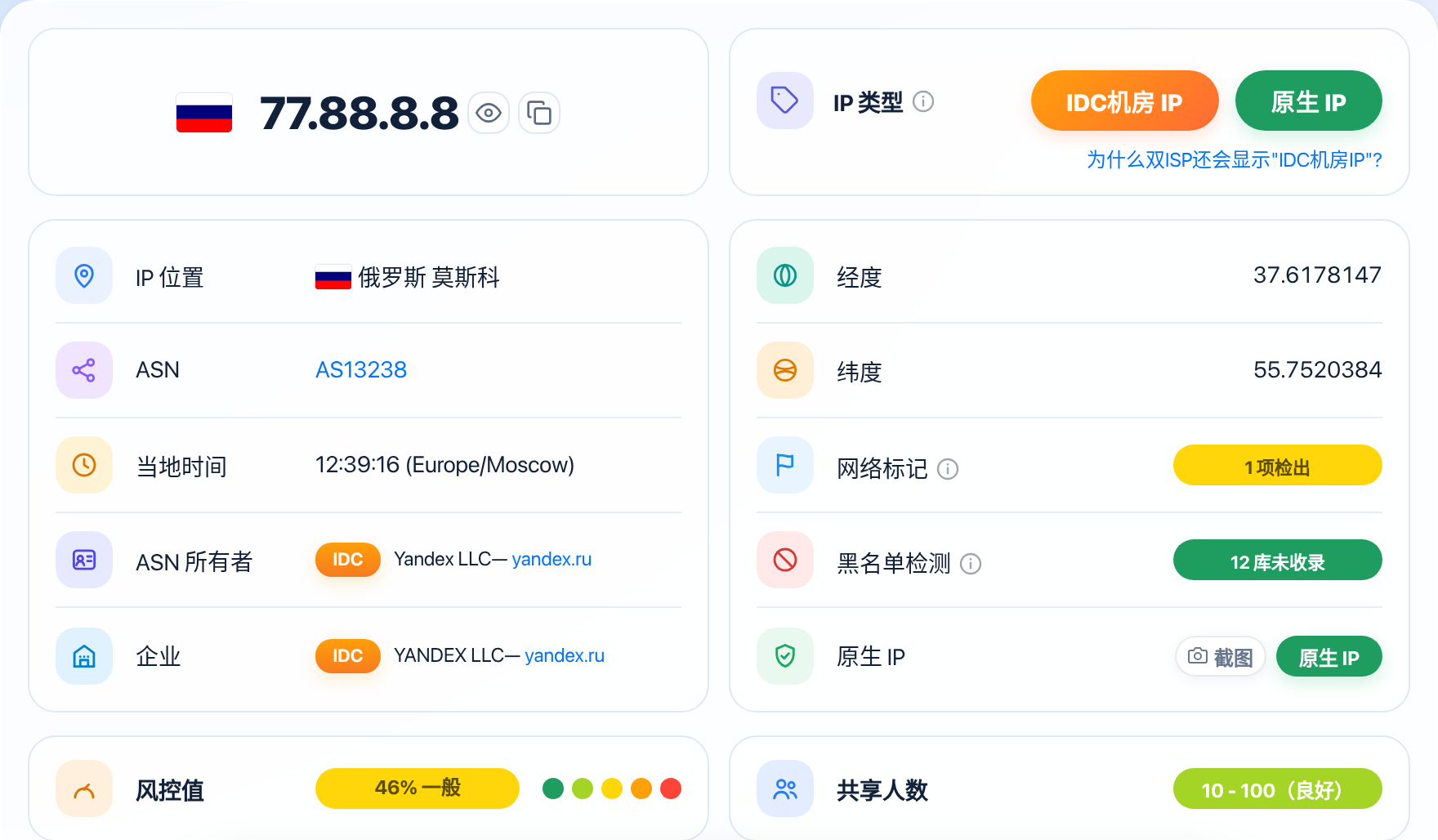
Using a free proxy from an unknown source carries safety risks far greater than the internet bill you save. The moment your device hands its traffic to a stranger's relay server, the other side is technically fully capable of running a man-in-the-middle attack on plaintext HTTP requests (an attacker in the middle can walk away with your passwords and cookies directly), or even secretly injecting malicious scripts into the web pages sent back to you. These nodes also come with zero uptime guarantees — you might be halfway through a form when the botnet machine's owner casually turns off the computer and your connection drops instantly.
Even setting data security aside, the exits in a zero-barrier public pool have long since been "socially dead" in the internet's risk systems. Since anyone can connect, bulk sign-up studios and malicious scanning scripts around the world take turns hammering these ports every day, pushing the sharing count of a single exit to the 5000+ Dangerous tier. In a pool ridden by thousands of people, the exit's IP purity has long since fallen through the floor, its combined risk score is locked permanently in the ≥70 High Risk range (how to read each tier, see What IP Purity Score Counts as Clean? How to Read Each Tier), and it is almost certainly already blacklisted. See What to Do If Your IP Is Blacklisted: How to Check and Remove It and How Many Sharing Users Is Too Many? When Should You Switch IPs?.
Scenarios Where You Should Never Use a Free Proxy
When signing up for or using high-risk AI platforms (such as Claude, ChatGPT, or Gemini), never touch a free line. These platforms are extremely sensitive to an exit's historical reputation — the moment they detect an exit in the 500-5000 Very Poor or 5000+ Dangerous concurrency range, you'll at best get stuck at phone verification, and at worst get your account permanently banned. For stable AI tool use, the right move is a dedicated residential IP at <20 Pure. See Why Is a Proxy IP's Risk Score Higher Than a Residential IP's?.
Any operation involving money — online banking logins or binding a PayPal or Stripe payment card — is strictly off-limits on a free relay channel. Beyond the fatal risk of card numbers and passwords being stolen in transit, payment anti-fraud systems will trigger a high-risk card-theft block and freeze your funds within milliseconds of seeing a transaction request from a public blacklist exit. For how PayPal and cross-border payment IP risk controls work, see PayPal & Cross-Border Payment IP Risk Controls: Why You Keep Getting Flagged.
Your main Gmail inbox tied to personal assets, your cross-border e-commerce store backend, and your primary social media accounts must never be logged into — even once — on a free exit. The moment your main account leaves a single login log on one of these high-risk exits, the account's internal abnormal risk score shoots up, and even switching back to a clean line later makes linked audits far more likely. For how to assess the linked-ban risk of a heavily polluted exit, see How Can You Tell If an IP Has Been Used by Many People?; for how to bring the risk score back down after it has been pushed up, see What to Do About a High IP Risk Score? How to Lower It.
How to Lower the Risk If You Really Have to Use One
If you only need to look up a public technical document temporarily and happen to have no paid line on hand, and you really must use a public node once or twice in an emergency, follow these four isolation baselines strictly to keep the risk as low as possible:
- Open a separate incognito browser window: never connect through your everyday browser, where your passwords and autofill data are saved. Open a fresh, empty incognito window and close it completely when you're done, so local cookies can't be read across sites.
- Force HTTPS encryption for the whole session: turn on "Always use secure connections" (Firefox's HTTPS-Only Mode) in your browser settings so your traffic is end-to-end encrypted and plaintext packets can't be snooped on the relay server.
- Browse only — never enter any username or password: during the emergency session, only visit public pages that don't require a login, and never type in credentials for any email, social app, or work backend.
- Run a basic health check on the exit before opening any pages: after connecting to the emergency node, check the exit's IP purity and sharing count first. If even basic pages keep getting blocked or erroring out, disconnect and give up on it — and switch to a legitimate paid residential IP as soon as your budget allows. For which to choose — residential or datacenter — and how to choose, see Residential Proxy vs. Datacenter Proxy: Which Should You Choose?; for the full standards for picking a legitimate line, see How to Choose a Proxy IP: A Guide to Avoiding Pitfalls and Picking Right.
After using a free node for an emergency, remember to check your accounts for anything odd: within 24 hours of connecting, watch for login alerts from unfamiliar locations in your inbox and for accounts asking for a second verification. If anything looks off, change your password at once and clear the saved login sessions in your browser. The biggest cost of a free node was never speed — it is the time spent cleaning up the mess afterward.
FAQ
Plenty of free proxy providers online offer "free trial nodes" — are those just as dangerous as public free proxies?
Trial nodes from a paid provider are limited in bandwidth and concurrency (they're usually still a shared pool), but the operator is bound by commercial reputation and won't deliberately set up a honeypot to steal your passwords. Even so, since trial nodes are still shared by thousands of people and carry extremely high risk, they still can't be used to log into a main account.
If I only visit HTTPS-encrypted sites through a free proxy, is my data completely safe from theft?
HTTPS encryption protects the content from being read by a man in the middle, but the relay server can still log which domains you visited, when you visited them, and how much data you transferred. Worse, a malicious honeypot may try to forge a root certificate for a man-in-the-middle attack — if your browser pops up a certificate risk warning, close it immediately.
A free proxy advertises itself as "Elite" (high anonymity) — does that mean it's safe and clean?
Elite only means the proxy server doesn't include your local real address in its HTTP headers — it says nothing about whether the exit itself is clean or safe. The vast majority of free nodes that call themselves elite are still hacker botnets or dirty blocks ridden by thousands of users, and their risk scores sit in the High Risk range all the same.
I'm a beginner learning web scraping on public pages — can I use a free proxy pool directly?
You can use it to test simple request code, but it runs extremely inefficiently in practice. More than 80% of the ports in a public free pool are dead or timing out, and mainstream websites blocked them long ago. For scraping practice, you're better off spending a few CNY on a legitimate pay-as-you-go dynamic proxy package — it saves time and runs far more reliably.
Notes
- Never install a "permanently free VPN" app from an unknown source on your phone: besides routing your traffic through a high-risk node, these free apps often secretly plant a malicious SDK in the background, turning your phone into a botnet exit in someone else's proxy pool.
- After using an emergency free node, clean up your system proxy settings promptly: some older proxy tools don't automatically restore your system network settings when they exit, leaving your normal internet access still trying to connect to a dead port — after closing the tool, check that the system proxy switch has been reset.
- Treat a legitimate paid dedicated line as an infrastructure cost for core business, always: losing an e-commerce store or a main AI account worth thousands of CNY to save a few dozen CNY on a proxy is a textbook case of penny-wise and pound-foolish.
Check the risks of free proxies
Check your network environment on ISPing.me — confirm the purity, sharing count, and risk signals, and only use it once it passes.
Check nowRelated reading:How to Choose a Proxy IP: A Guide to Avoiding Pitfalls and Picking RightWhy Is a Proxy IP's Risk Score Higher Than a Residential IP's?What Is the IP Sharing Count, and Why Does It Matter?What to Do If Your IP Is Blacklisted: How to Check and Remove ItWhat to Do About a High IP Risk Score? How to Lower ItWhat Is IP Purity? How to Read the Risk ScoreHow Can You Tell If an IP Has Been Used by Many People?